
How AI Will Reshape Technology, Business, and Society in 2026
Explore how artificial intelligence will reshape technology, business, and society in 2026, including enterprise AI, infrastructure, regulation, workforce transformation, and future trends.
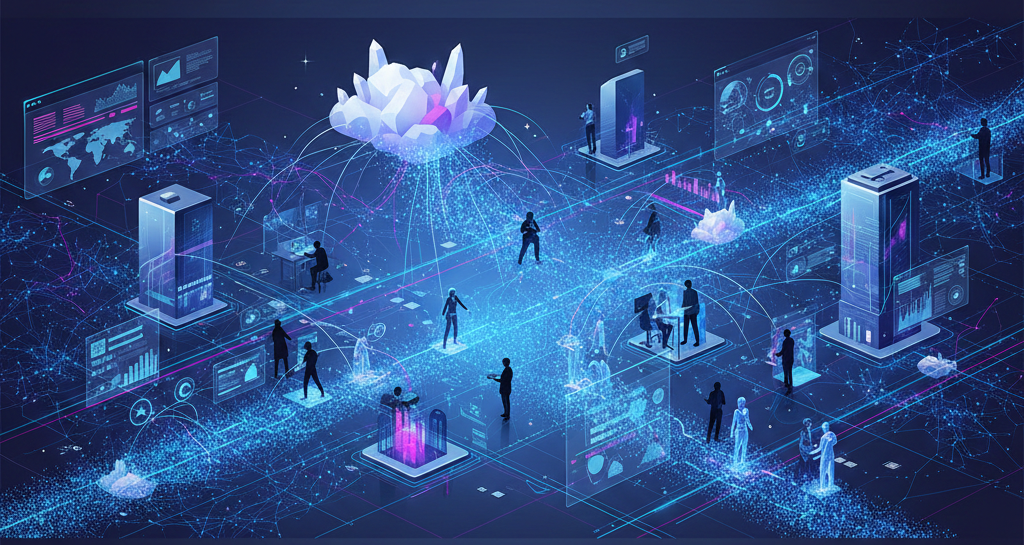
Artificial intelligence is entering a decisive era. As we move into 2026, AI is no longer emerging as a disruptive force, it is becoming the structural backbone of modern technology, business strategy, and societal change. Organizations across the world are transitioning from experimental AI use cases to large-scale, mission-critical deployments that influence decision-making, productivity, and customer experience.
The year 2026 will not be defined by whether AI is adopted, but by how deeply it is embedded into systems that power economies, institutions, and everyday life.
The Evolution of Artificial Intelligence Heading into 2026
By 2026, artificial intelligence will shift from isolated tools to interconnected intelligence layers embedded across digital ecosystems. Large language models, predictive systems, and multimodal AI will operate together, enabling systems to understand context, intent, and outcomes more effectively than ever before.
This evolution will push AI beyond automation and into augmentation. Instead of replacing workflows, AI will increasingly collaborate with humans, assisting in planning, analysis, and complex problem-solving. Businesses that understand this shift will gain long-term strategic advantages.
At the same time, expectations around reliability, transparency, and accountability will rise. AI systems will be expected to deliver consistent results, explain decisions, and operate within ethical and regulatory boundaries.
AI Infrastructure Will Become a Strategic Differentiator
One of the most significant changes shaping 2026 is the transformation of AI infrastructure into a competitive asset. Cloud providers, enterprise platforms, and global technology firms are investing heavily in data centers, specialized AI chips, and distributed compute systems designed specifically for large-scale AI workloads.
As AI models grow more complex, access to efficient and scalable infrastructure will determine performance, cost, and speed of innovation. Organizations that control or strategically partner for AI infrastructure will be able to deploy smarter systems faster, while others may struggle with rising costs and technical limitations.
Infrastructure will no longer be a backend concern. It will directly influence business agility, product quality, and market leadership.
How AI Will Reshape Enterprise Software and Operations
In 2026, AI will fundamentally redefine how enterprise software is designed and used. Traditional dashboards and static workflows will give way to adaptive systems that continuously learn from data and user behavior.
AI-driven platforms will assist organizations by generating insights proactively, identifying risks before they escalate, and optimizing processes in real time. Software will become less about manual input and more about intelligent guidance.
This shift will also change how teams work. Decision-makers will rely on AI-generated forecasts and simulations, developers will collaborate with AI copilots throughout the software lifecycle, and operations teams will use AI to predict failures and optimize resources before issues occur.
The Growing Role of AI in Cybersecurity and Risk Management
As digital systems become more complex, cybersecurity threats will grow in scale and sophistication. In 2026, AI will play a central role in defending organizations against these threats.
AI-powered security systems will continuously analyze patterns across networks, detect anomalies in real time, and respond autonomously to potential attacks. Instead of reacting after breaches occur, organizations will increasingly rely on predictive security models that anticipate threats before they materialize.
This proactive approach will be essential as attack surfaces expand with cloud adoption, remote work, and connected devices.
Regulation, Ethics, and Responsible AI in 2026
With AI becoming deeply embedded in society, regulation will intensify in 2026. Governments and regulatory bodies will introduce clearer frameworks addressing data usage, model transparency, accountability, and intellectual property.
One of the most critical areas of focus will remain AI training data. Questions around consent, copyright, and fair compensation will shape how AI models are developed and deployed. Companies that fail to address these concerns may face legal, financial, and reputational risks.
Responsible AI will no longer be optional. Ethical design, bias mitigation, and explainability will become essential components of AI strategy, particularly for organizations operating at scale.
AI’s Impact on Consumer Technology and Daily Life
In consumer technology, AI will become more contextual and personalized in 2026. Digital assistants, smart devices, and applications will better understand user intent and adapt to individual preferences over time.
However, this increased intelligence will come with higher expectations. Users will demand reliability, privacy, and control over how AI systems interact with their data. Poorly designed AI experiences may quickly erode trust.
The most successful consumer AI products will prioritize simplicity, predictability, and transparency alongside advanced capabilities.
Workforce Transformation and the Future of Work
AI will continue to reshape the workforce in 2026, not by eliminating jobs wholesale, but by redefining roles and responsibilities. Routine tasks will increasingly be handled by AI systems, allowing humans to focus on strategy, creativity, and oversight.
Organizations that invest in AI literacy and reskilling will adapt more smoothly to this transition. Employees who understand how to work alongside AI will become more valuable, not less.
The future of work will depend on collaboration between human intelligence and artificial intelligence rather than competition between the two.
What Businesses Must Do to Prepare for 2026
To remain competitive in an AI-driven future, organizations must take deliberate and strategic action.
AI initiatives should be aligned with long-term business goals rather than short-term experimentation.
Data quality, governance, and security must be treated as foundational assets.
Ethical and responsible AI practices should be integrated from the earliest stages of development.
Scalable architecture and infrastructure planning must account for rapidly growing AI workloads.
Businesses that approach AI with clarity, discipline, and responsibility will be best positioned to thrive in 2026 and beyond.
Looking Ahead: AI as a Defining Force of 2026
Artificial intelligence will be one of the most influential forces shaping technology, business, and society in 2026. Its impact will extend beyond efficiency gains and automation, influencing how decisions are made, how systems are designed, and how value is created.
The organizations that succeed will not simply adopt AI, but will embed it thoughtfully into their culture, processes, and products.
At Vercelabs, we believe AI represents a long-term transformation opportunity, one that rewards businesses that combine innovation with responsibility and strategic execution.
Tagged with:
Recent Articles
View All
The Future of AI-Powered Development
Explore how artificial intelligence is revolutionizing the software development lifecycle and what it means for developers and businesses.
Building Design Systems That Scale
Learn best practices for creating and maintaining design systems that grow with your organization.

Making Data-Driven Decisions in Enterprise
A practical guide to implementing data analytics strategies that drive real business value.
Never Miss an Update
Subscribe to our newsletter and get the latest insights delivered directly to your inbox